AEC hackathon · glazing and life safety
Watch how people look at a building.
Specify what works for them.
TeamVision · Voice · Vibe
How it works

01
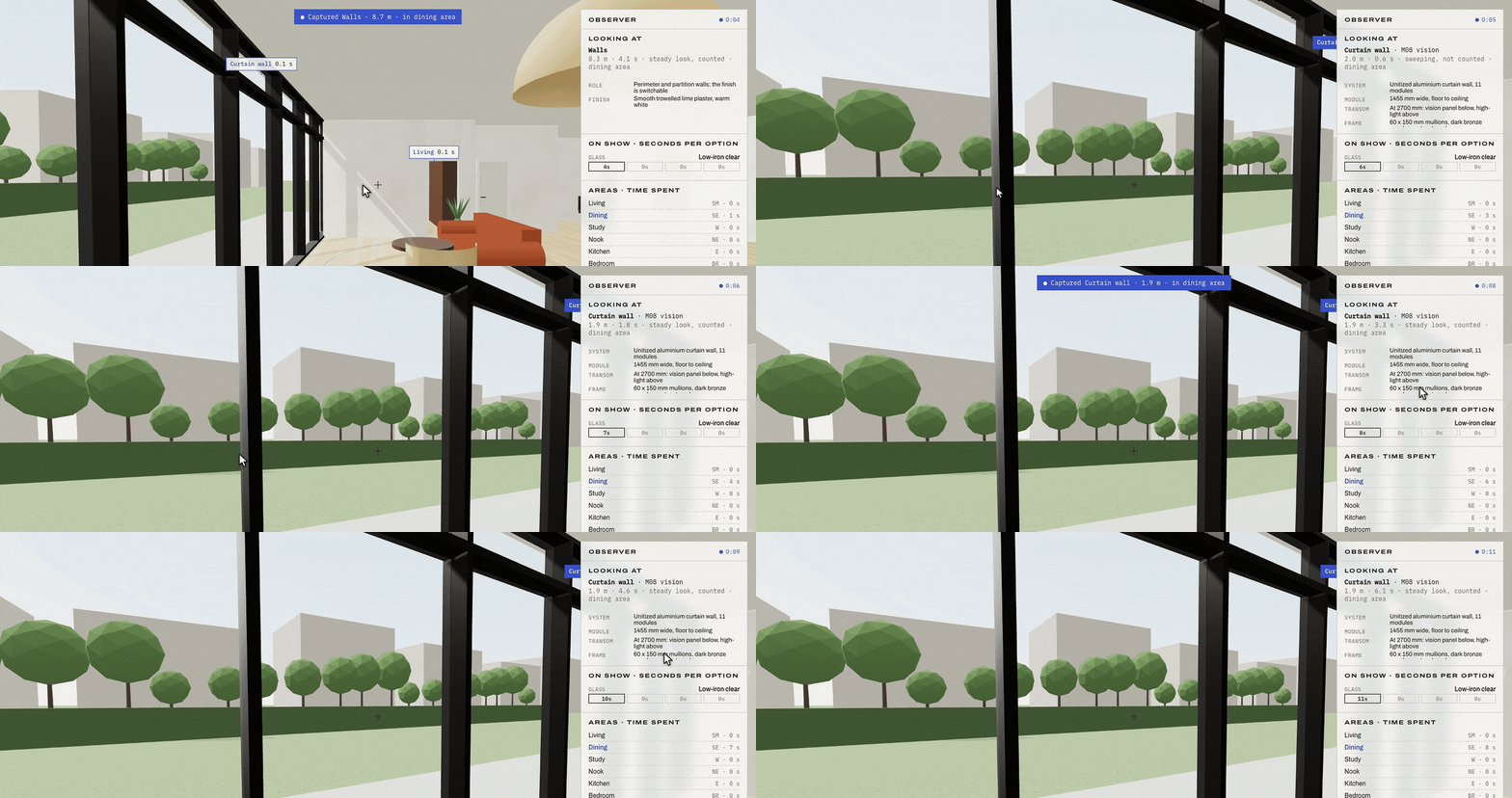
A first-person walk through a real apartment, in the browser. No install.
02
Only steady looks count: turning under 20°/s, moving under 0.6 m/s.
03
Every pane, mullion and sofa is tagged with its IFC class and specification.
04
The report names the glass, with its make-up, VLT and g-value.
Visual Vibes · glazing study
The test
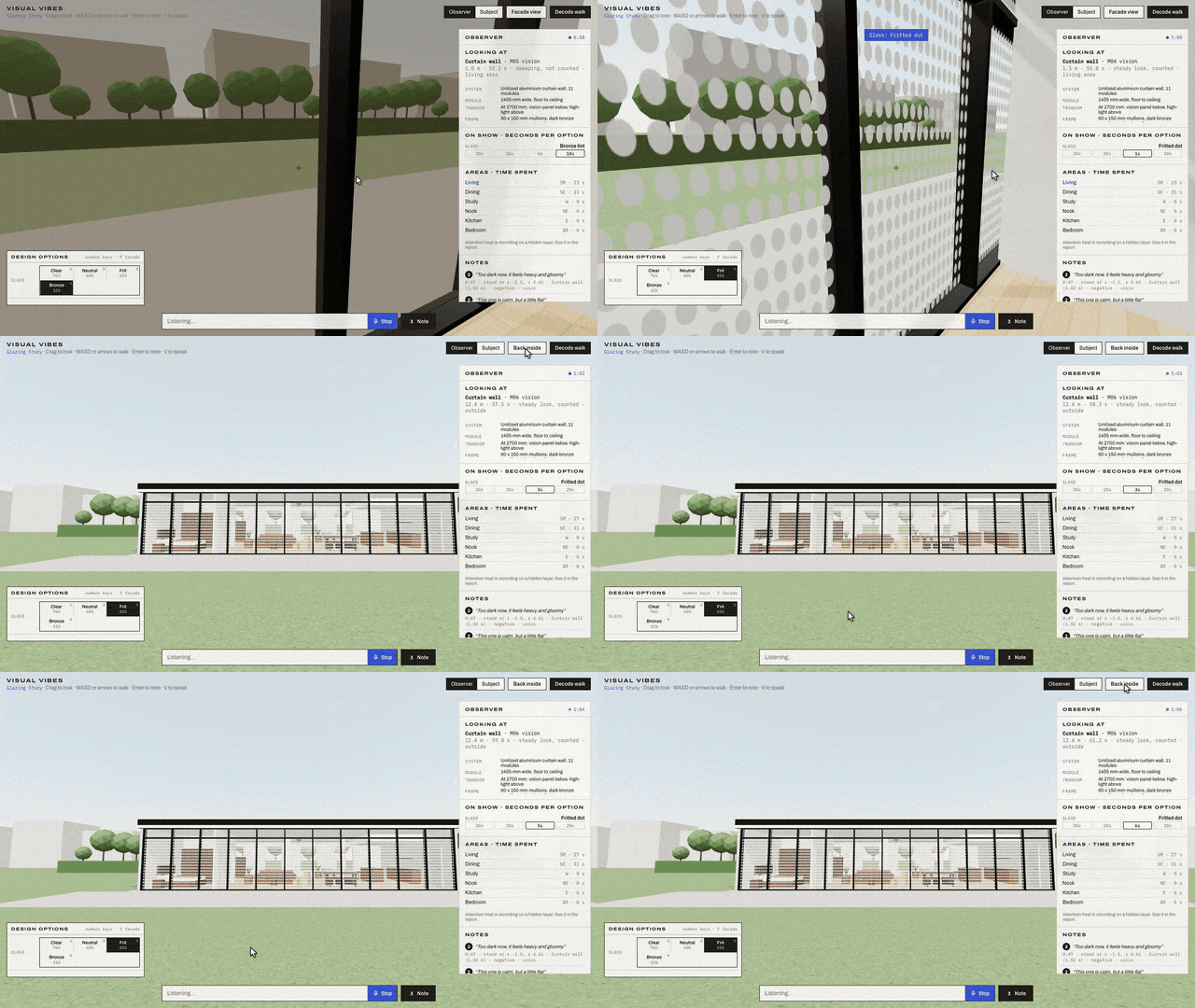
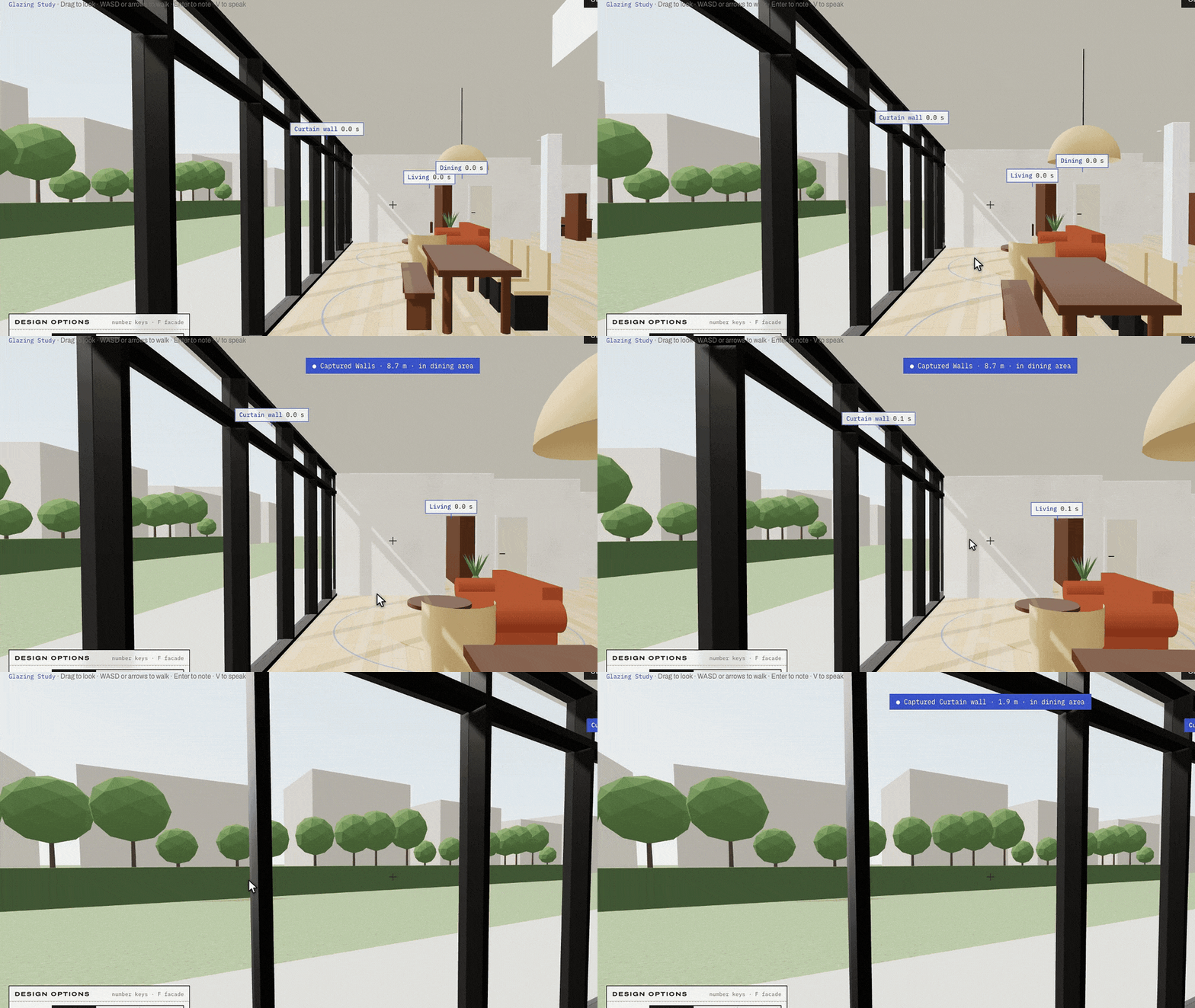
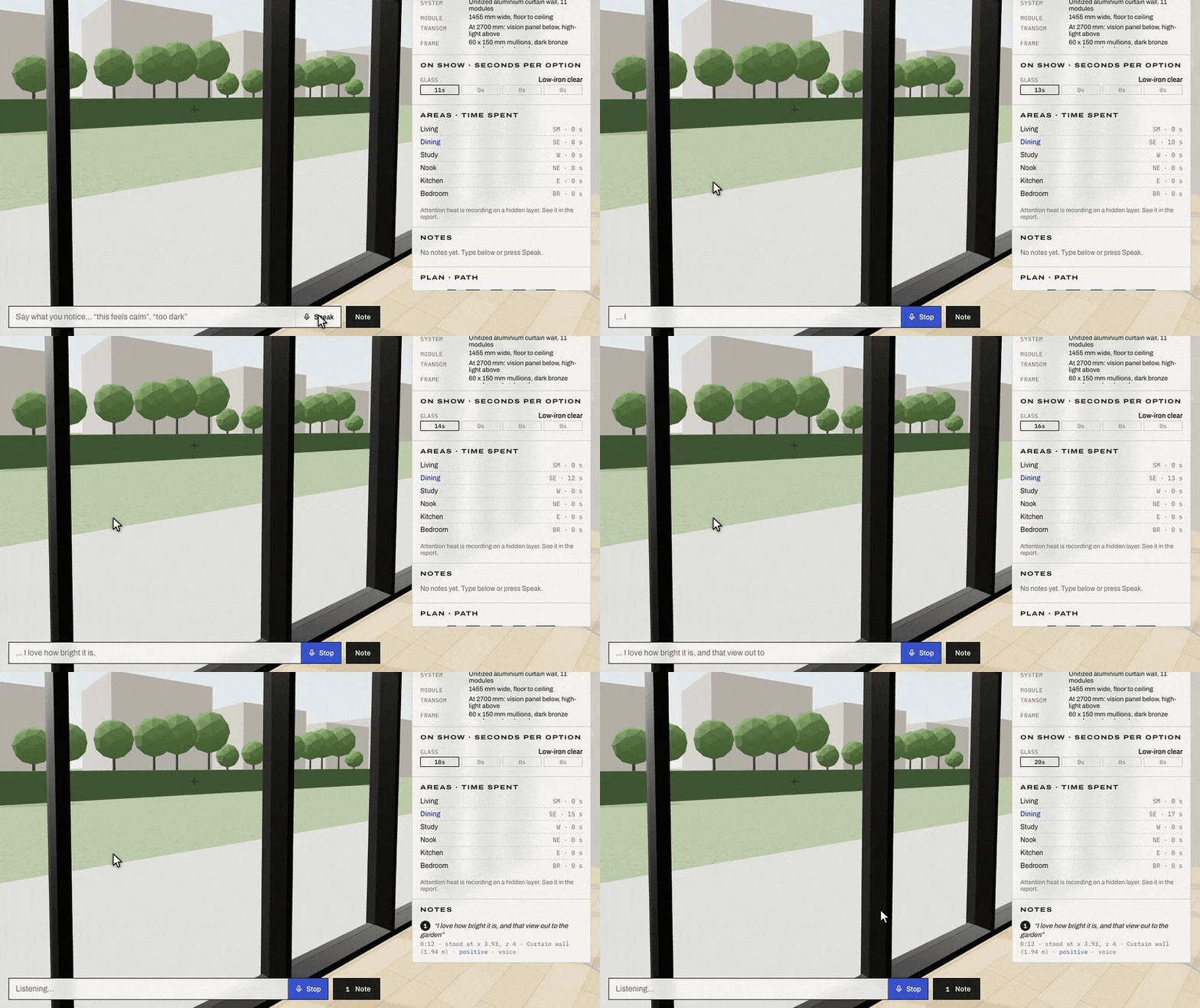
Four products swap on both facades at once, every 20 seconds. The walker never touches a control.
Because the geometry never changes, size can’t bias the result.
VLT · clear 76% · neutral 60%
frit 45% · bronze 32%

Clear → neutral · observer view

Neutral → bronze · subject view

Bronze → frit · then the garden

Frit → clear · mid-look
Visual Vibes · glazing study · four real swaps from one recorded walk, sped up 1 to 3×
The metadata
Visual Vibes · glazing study
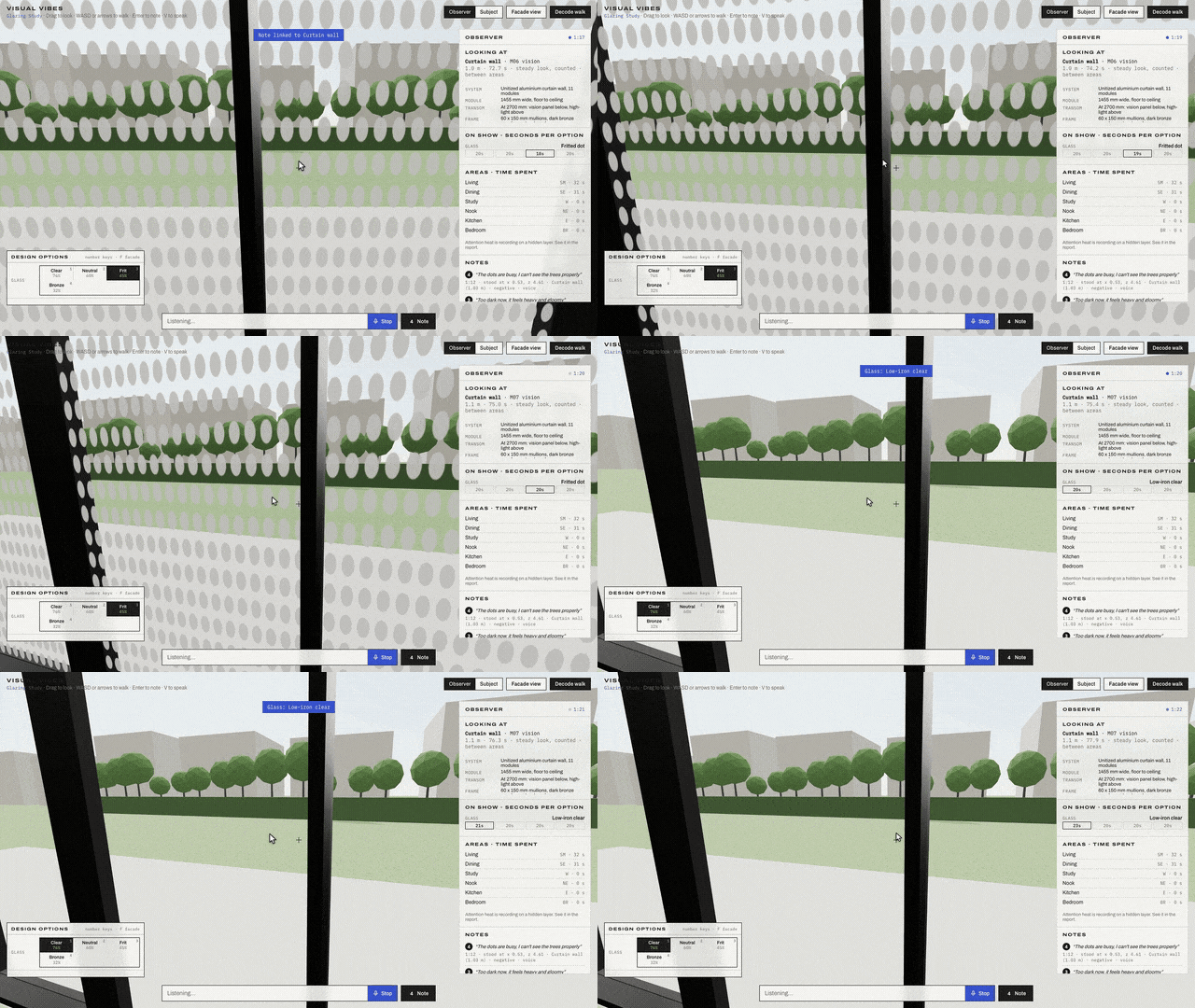
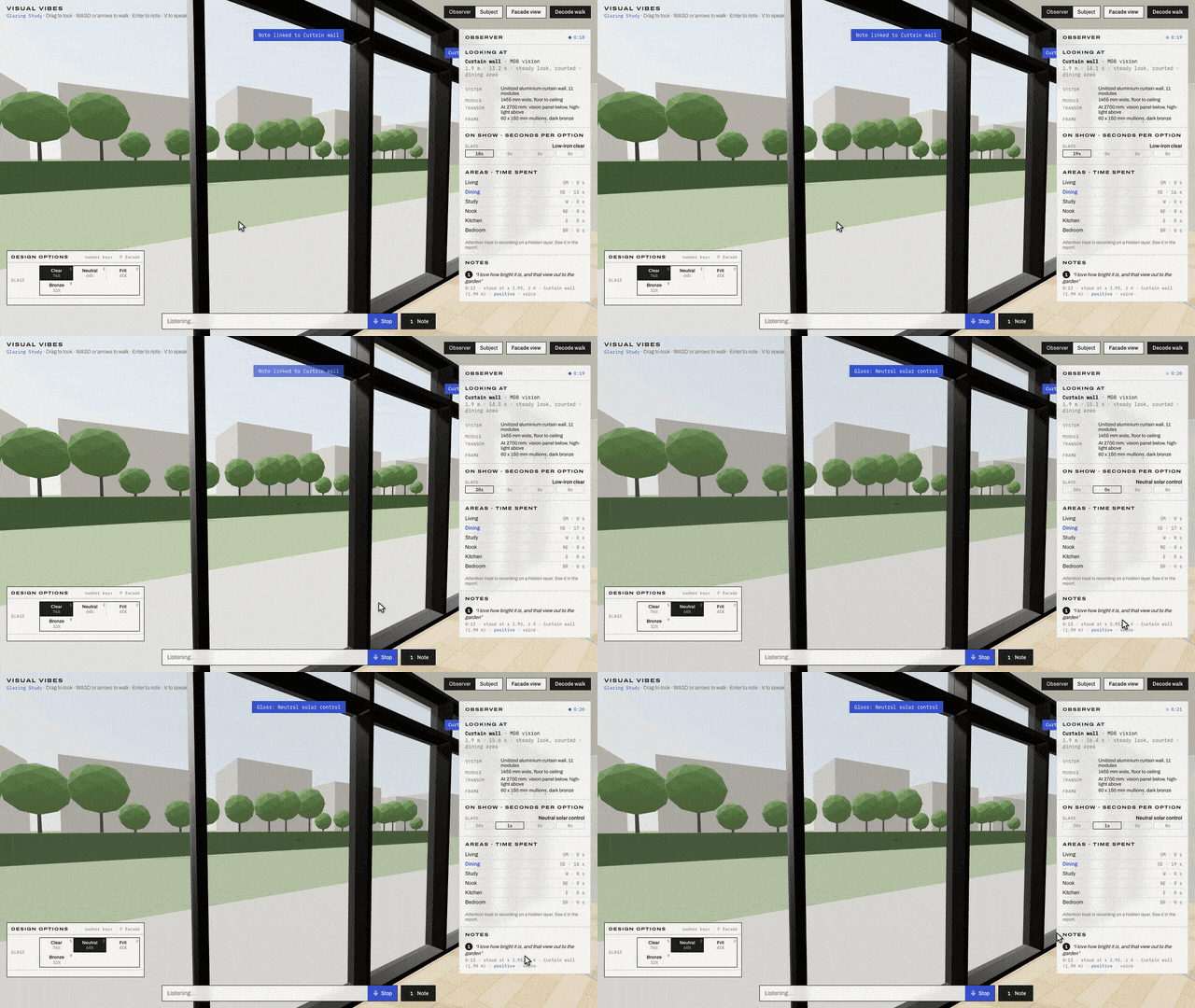
During the walk
Visual Vibes · glazing study · Observer mode, recorded demo walk at about real time
One demo walk · 2 min 10 s · 7 remarks · verdict: leaning
6 mm solar-control toughened / 16 mm argon / 6.8 mm laminated · triple-silver coating · 08 81 00
VLT 60%
g 0.33
U 1.0 W/m²K
Ra 94
Rw 36 dB
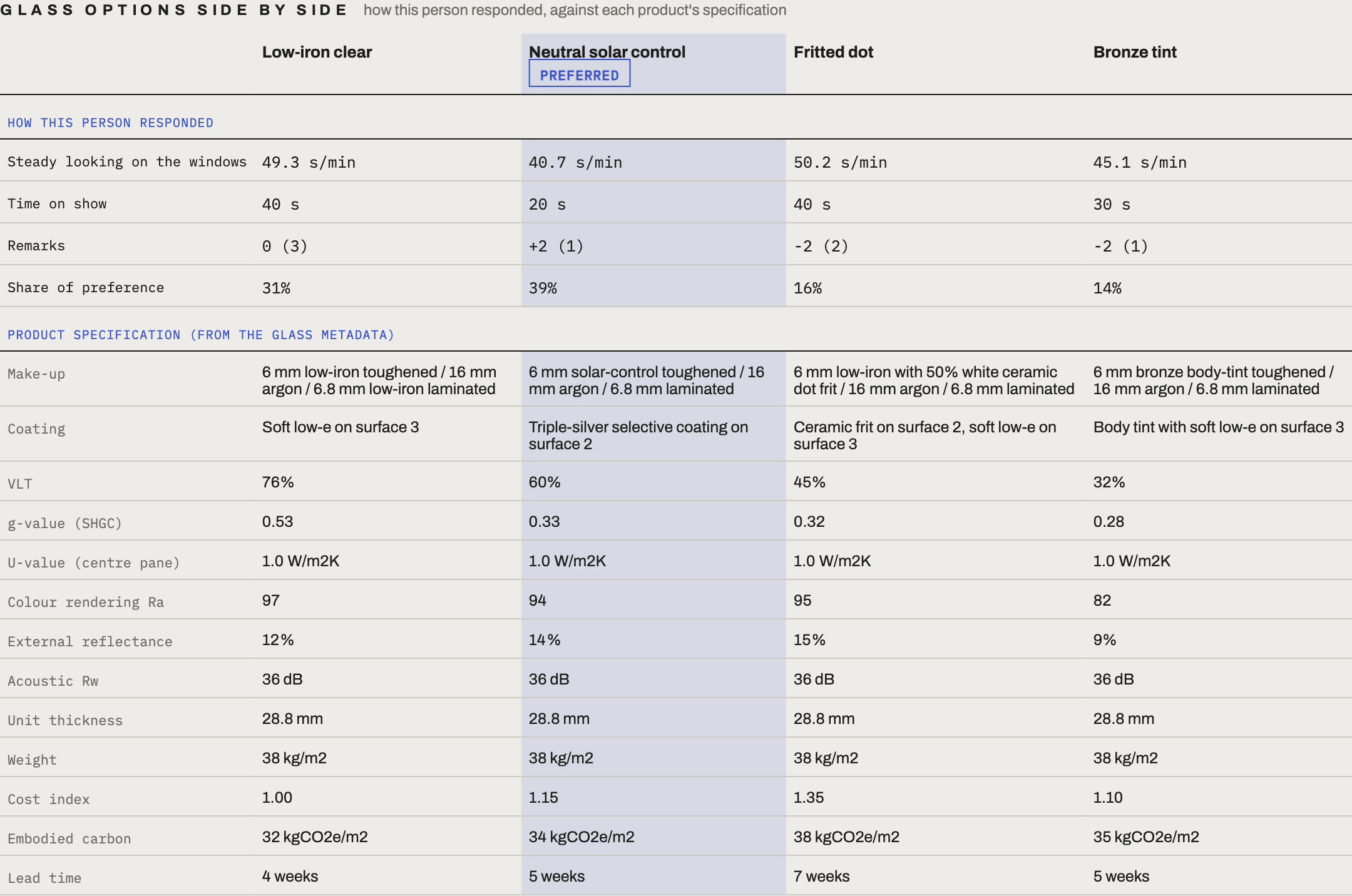
| This walk | Low-iron clear | Neutral | Fritted dot | Bronze tint |
|---|---|---|---|---|
| Steady looking | 49.3 s/min | 40.7 s/min | 50.2 s/min | 45.1 s/min |
| Time on show | 40 s | 20 s | 40 s | 30 s |
| Remarks | 0 (3) | +2 (1) | −2 (2) | −2 (1) |
| Share of preference | 31% | 39%, chosen | 16% | 14% |
Looked at a little less than clear or fritted glass, but the only glass spoken of warmly. Each remark point moves a glass’s score by 25%.
Visual Vibes · glazing study
Decode walk · spec sheet

Steady looking, time on show, remarks and share of preference for each glass.
Make-up, coating, VLT, g-value, U-value, Ra, reflectance, Rw, thickness and weight.
Cost index, embodied carbon and lead time, so the trade-off sits on one sheet.
Visual Vibes · glazing study · report
Decode walk · glass explorer

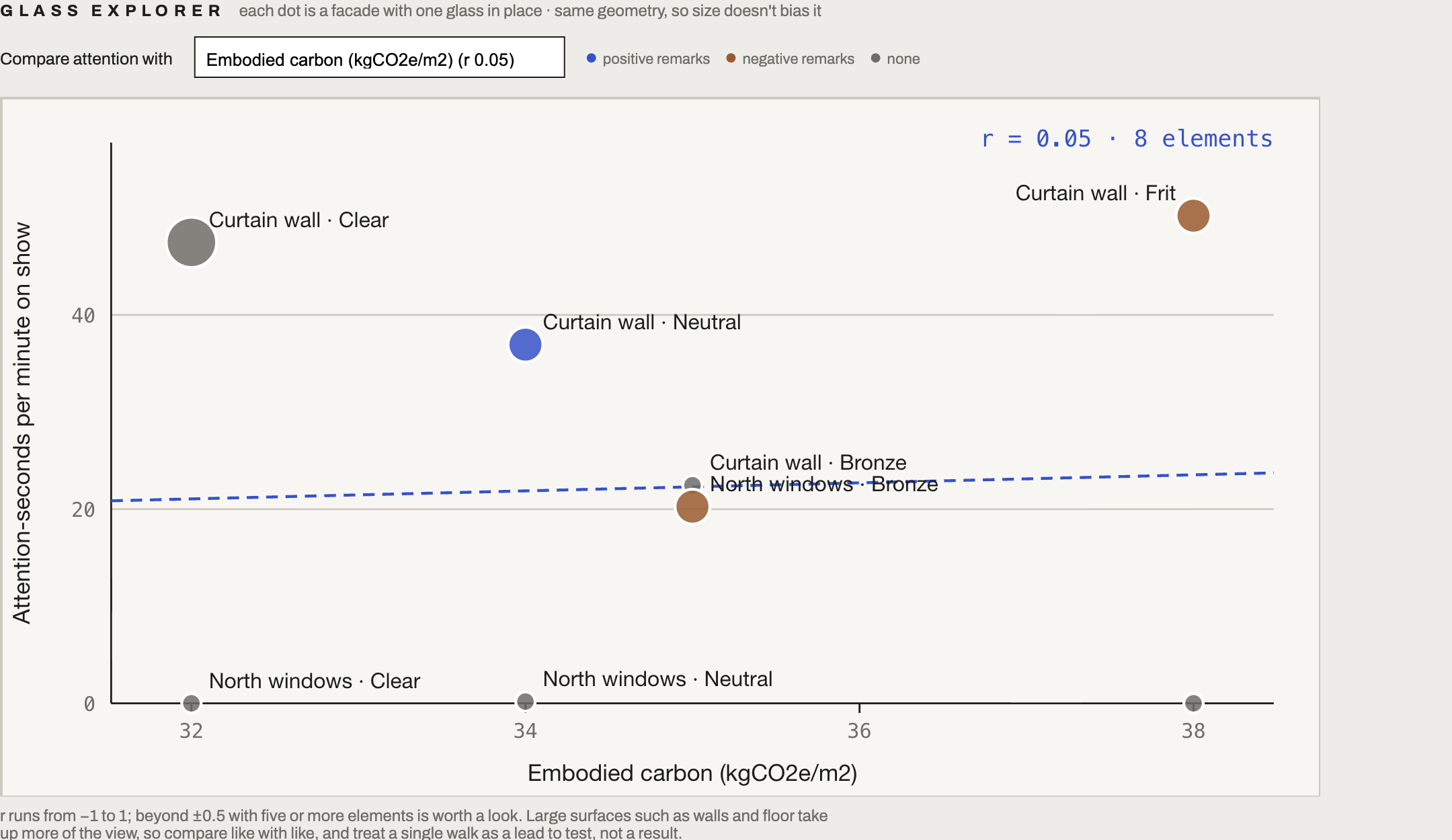
VLT, g-value, cost, carbon, lead time, or any of the ten design traits.
Each dot is one glass on one facade. The geometry never changes, so size can’t win.
r shows the trend across elements. One walk is a lead to test with more people.
Visual Vibes · glazing study · report
Decode walk · design DNA

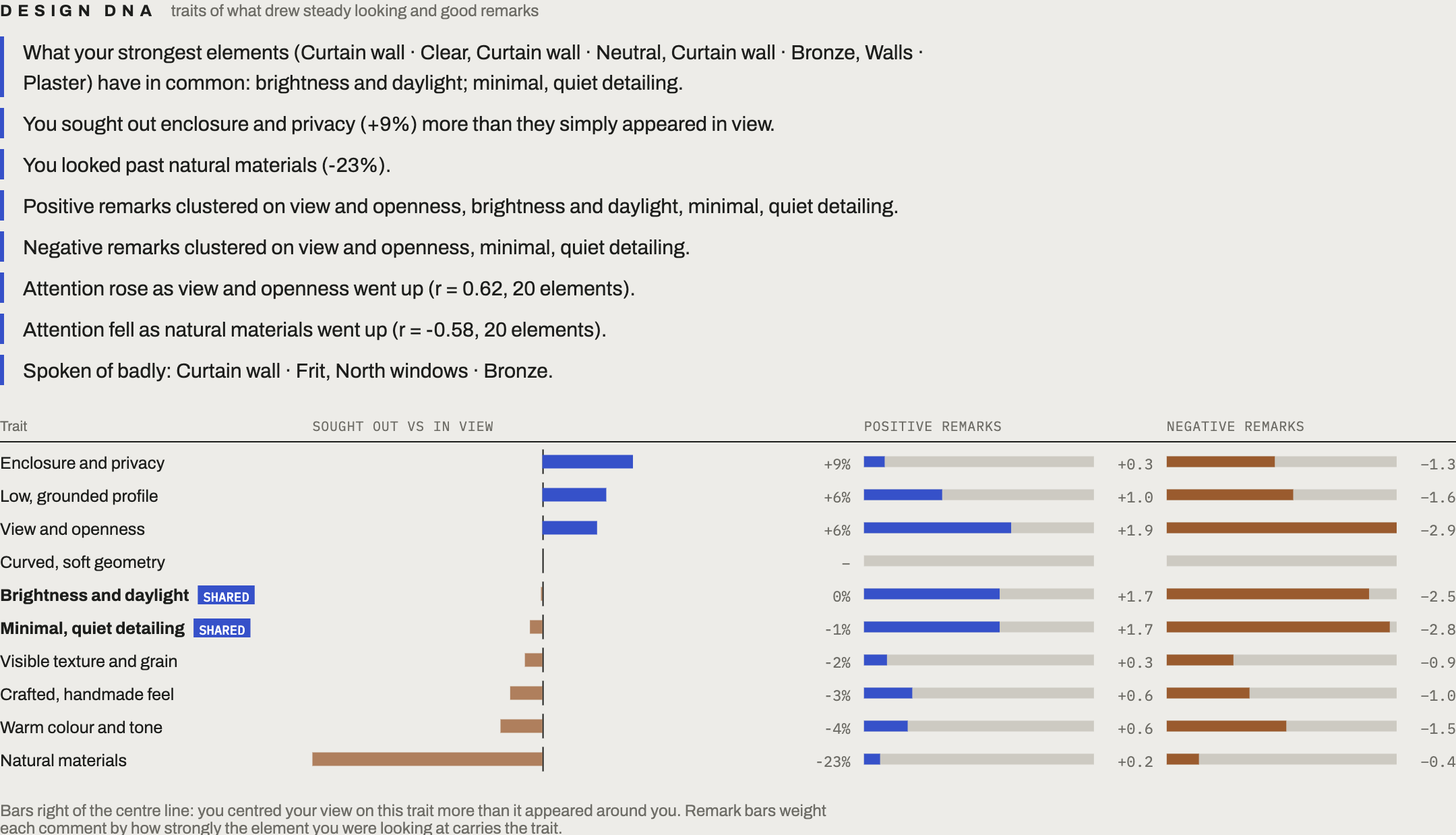
From curved geometry to privacy, scored 0 to 1 in the metadata.
Bars right of centre: the person centred their view on that trait more than it surrounded them.
Each remark is weighted by how strongly the element in view carries the trait.
Visual Vibes · glazing study · report
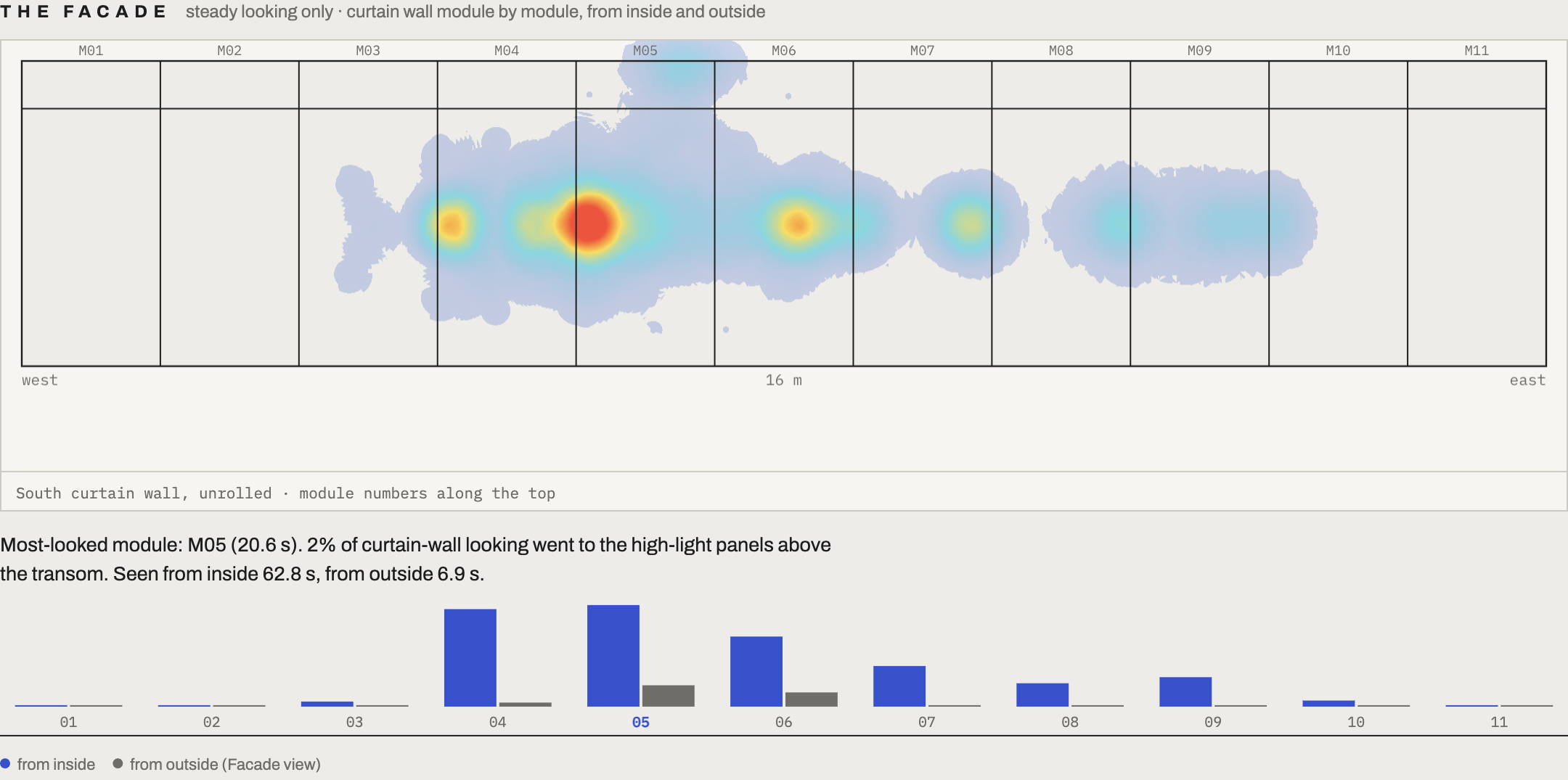
The facade, module by module

M05 · 20.6 s
most-looked module
2%
of looking went above the 2.7 m transom
62.8 s · 6.9 s
steady looking from inside, and from the garden
Visual Vibes · glazing study · report
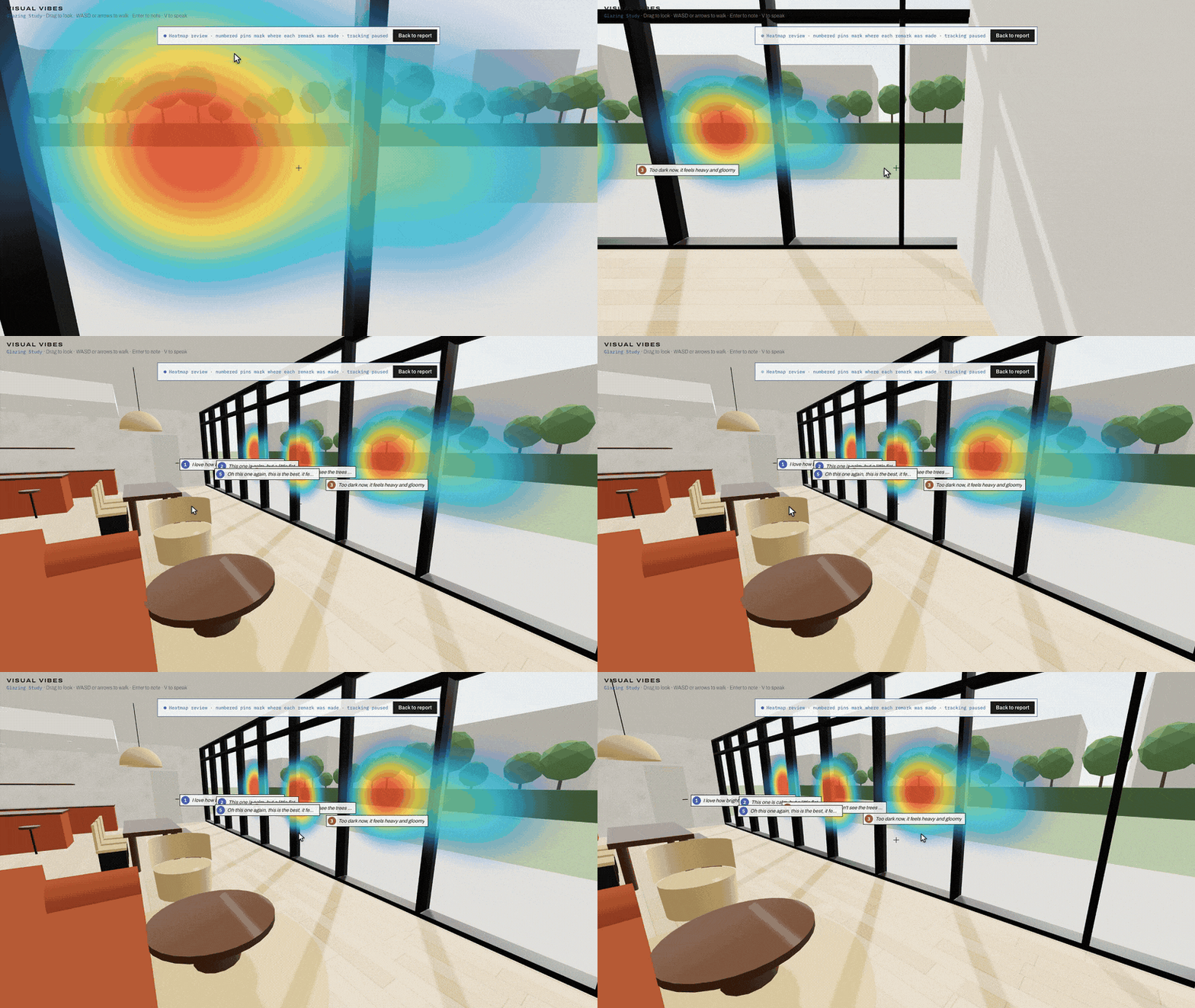
The remarks


Visual Vibes · glazing study · recorded demo walk
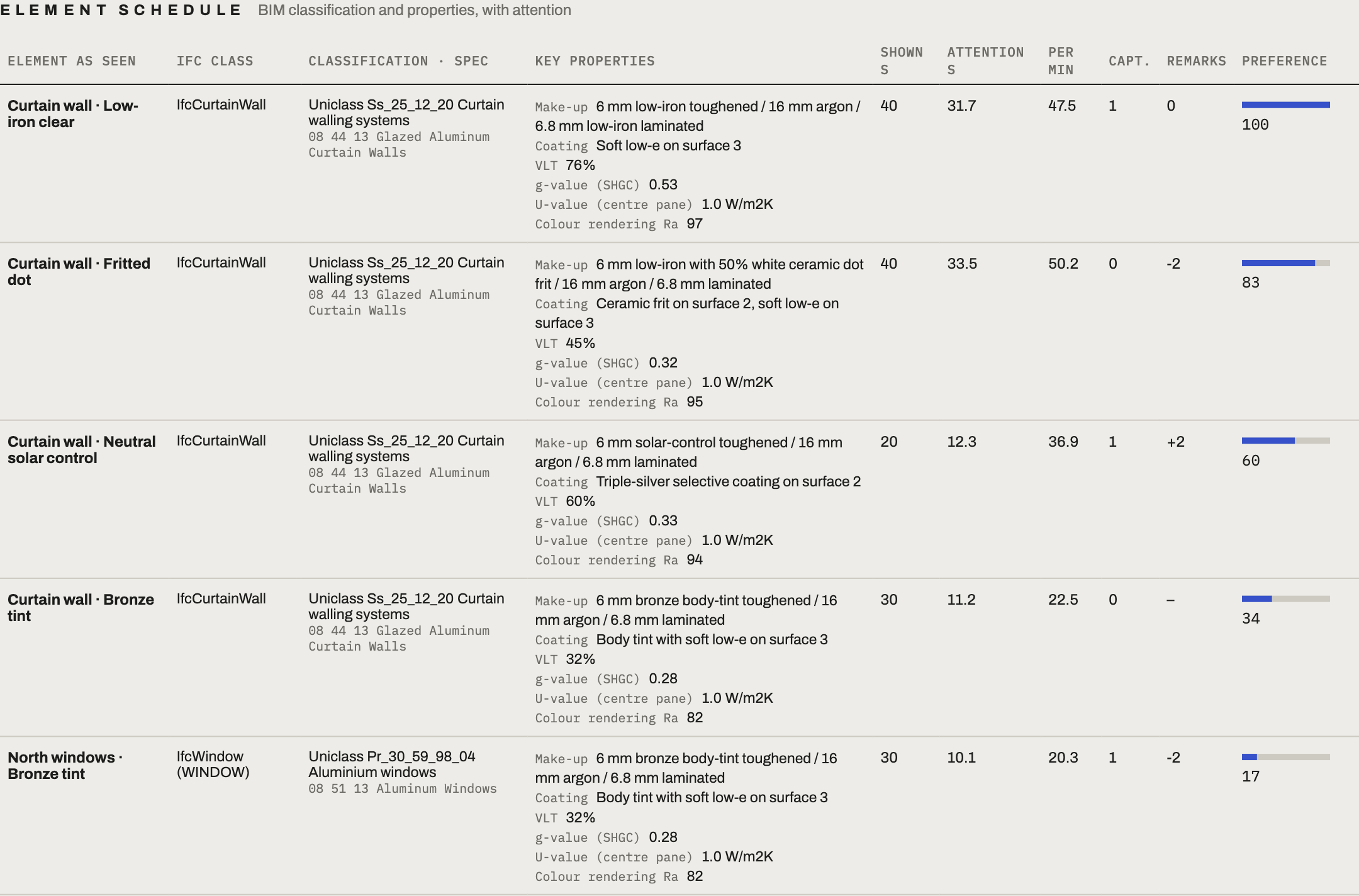
Decode walk · element schedule

IFC class, Uniclass code and spec section for every element as seen.
Key properties straight from the metadata: make-up, coating, VLT, g, U and Ra.
Time on show, attention, captures, remarks and a preference index. Exports as CSV.
Visual Vibes · glazing study · report
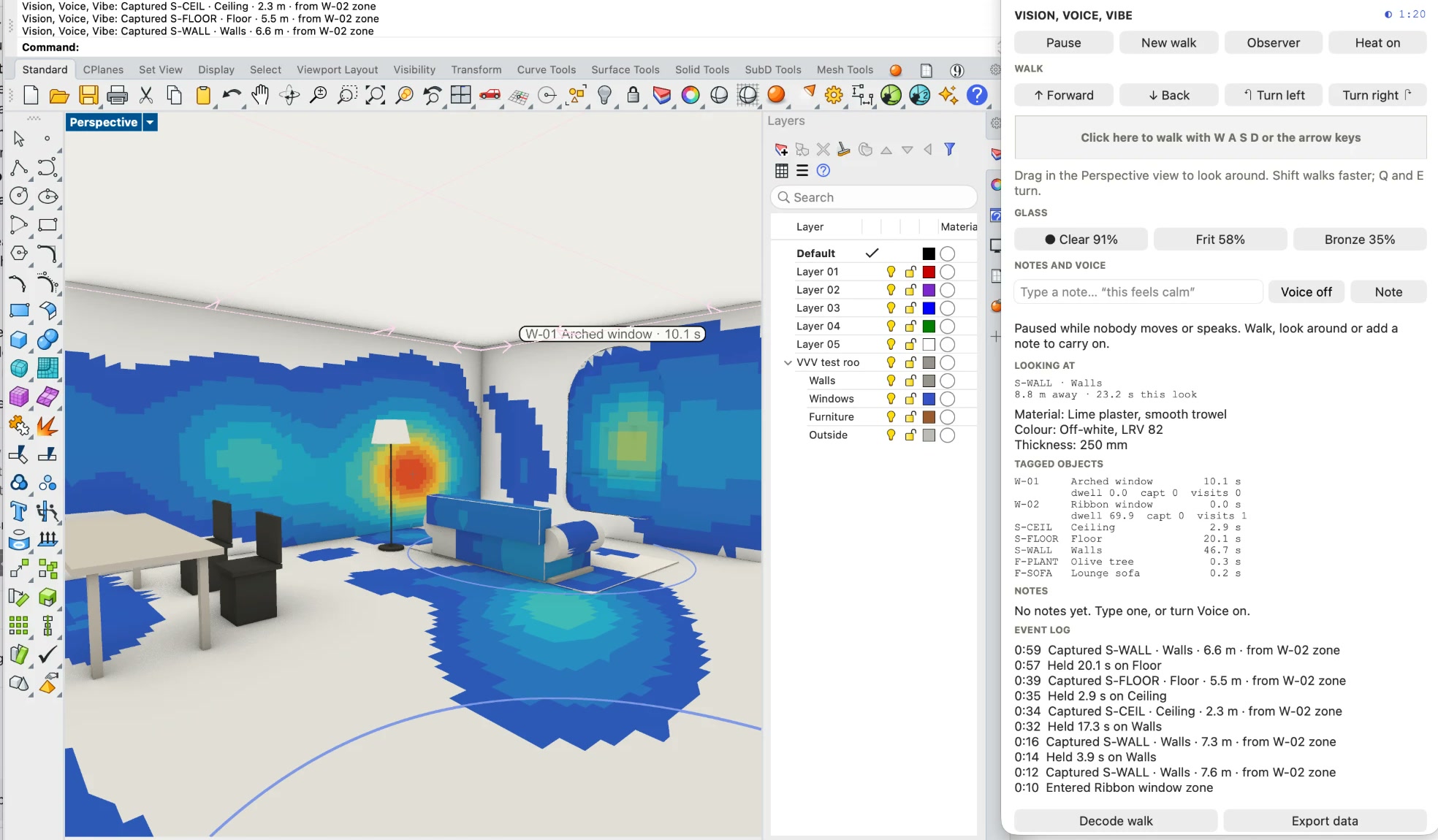
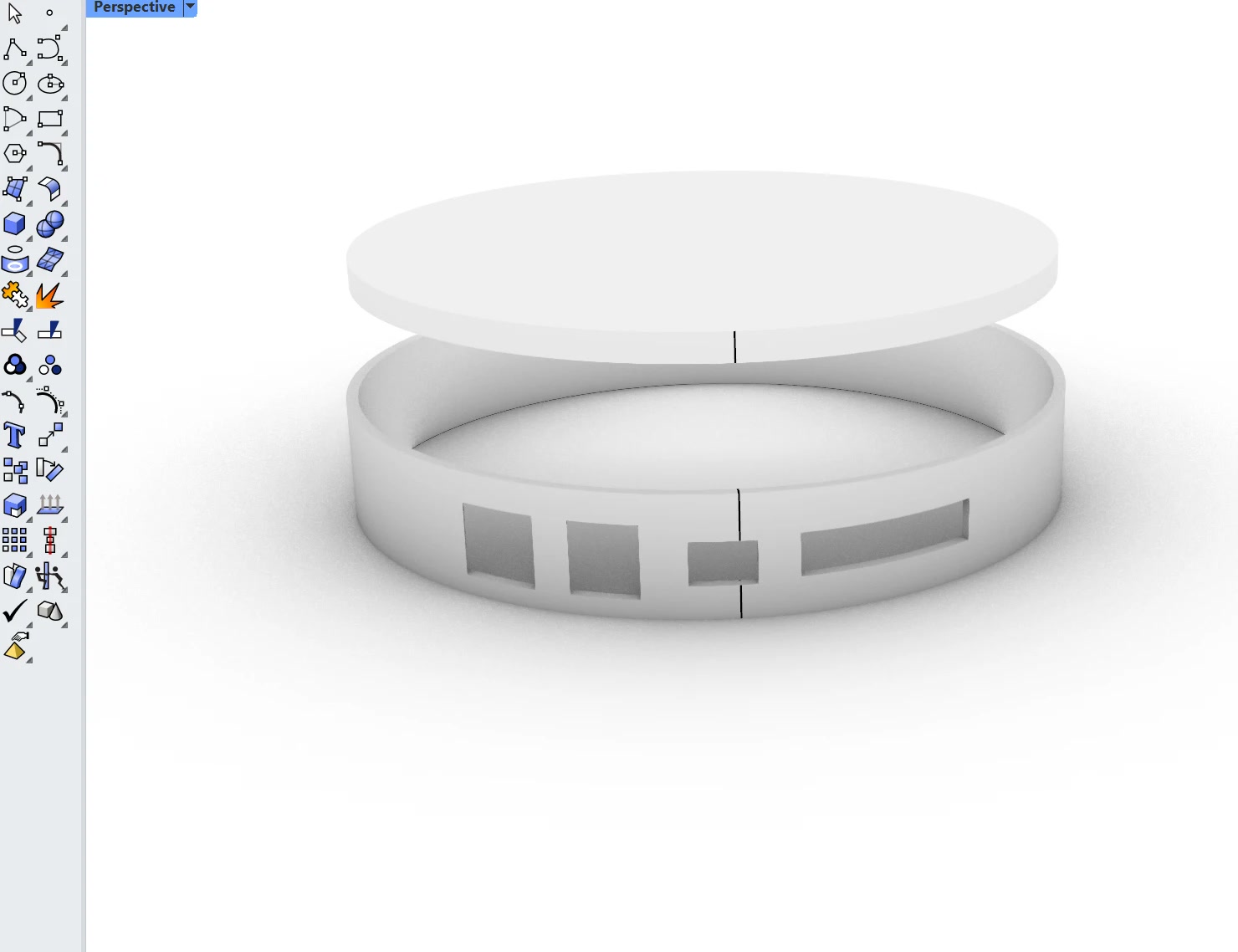
Any platform · Rhino 9 plug-in
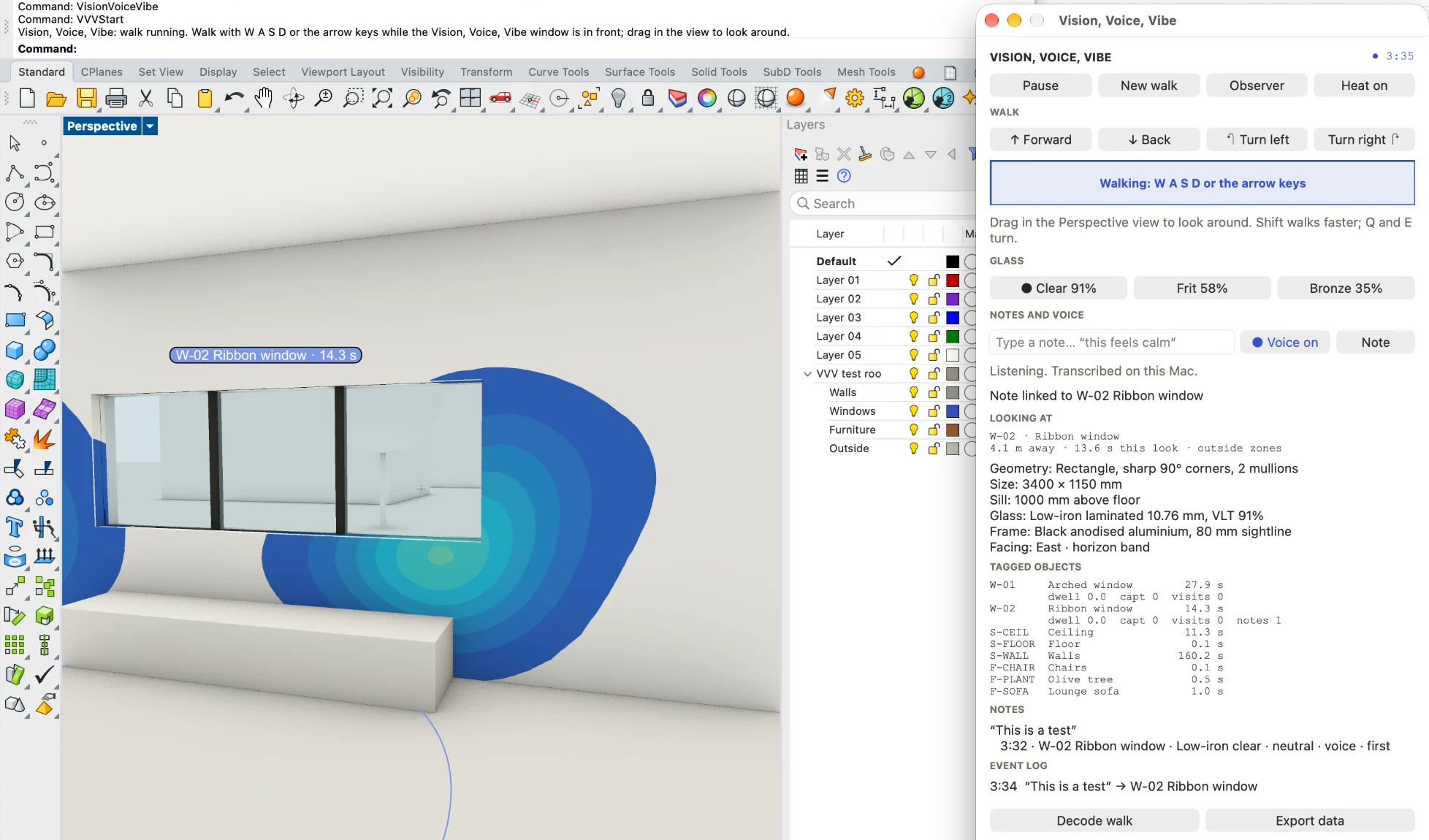
The walk, the tagged metadata, the heat map and voice notes run as a native plug-in on the Rhino model itself. One more step toward a fully digital design process, with the data to make the best call for the client.


Visual Vibes · Rhino 9 for Mac · screenshots from a live session
Rhino to the web app
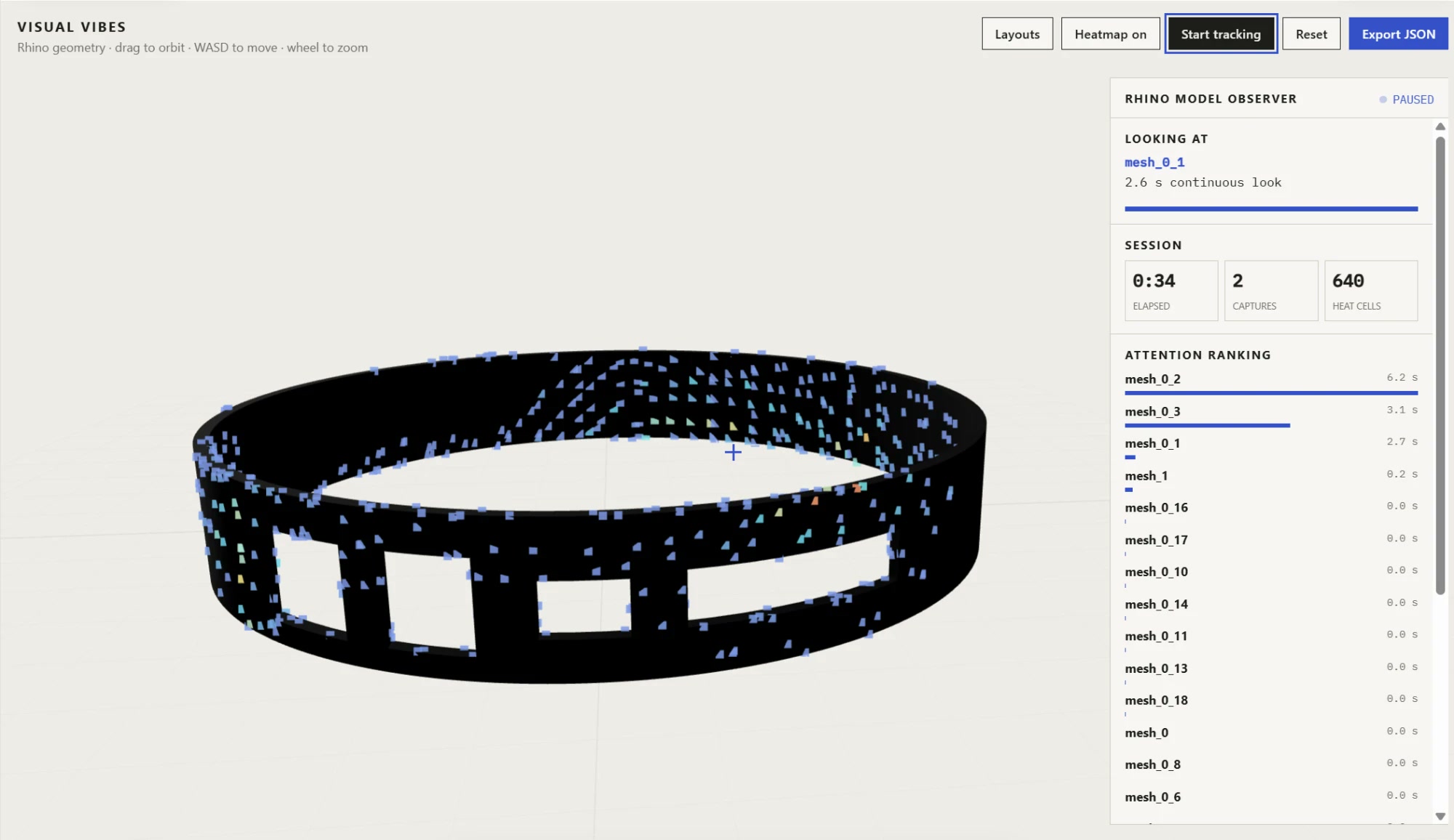
The plug-in also works the other way: objects from Rhino go up to the web app, where a client can pick them as a layout, walk them, and see exactly which ones held their attention.

01
Send the model’s objects up to the web app

02
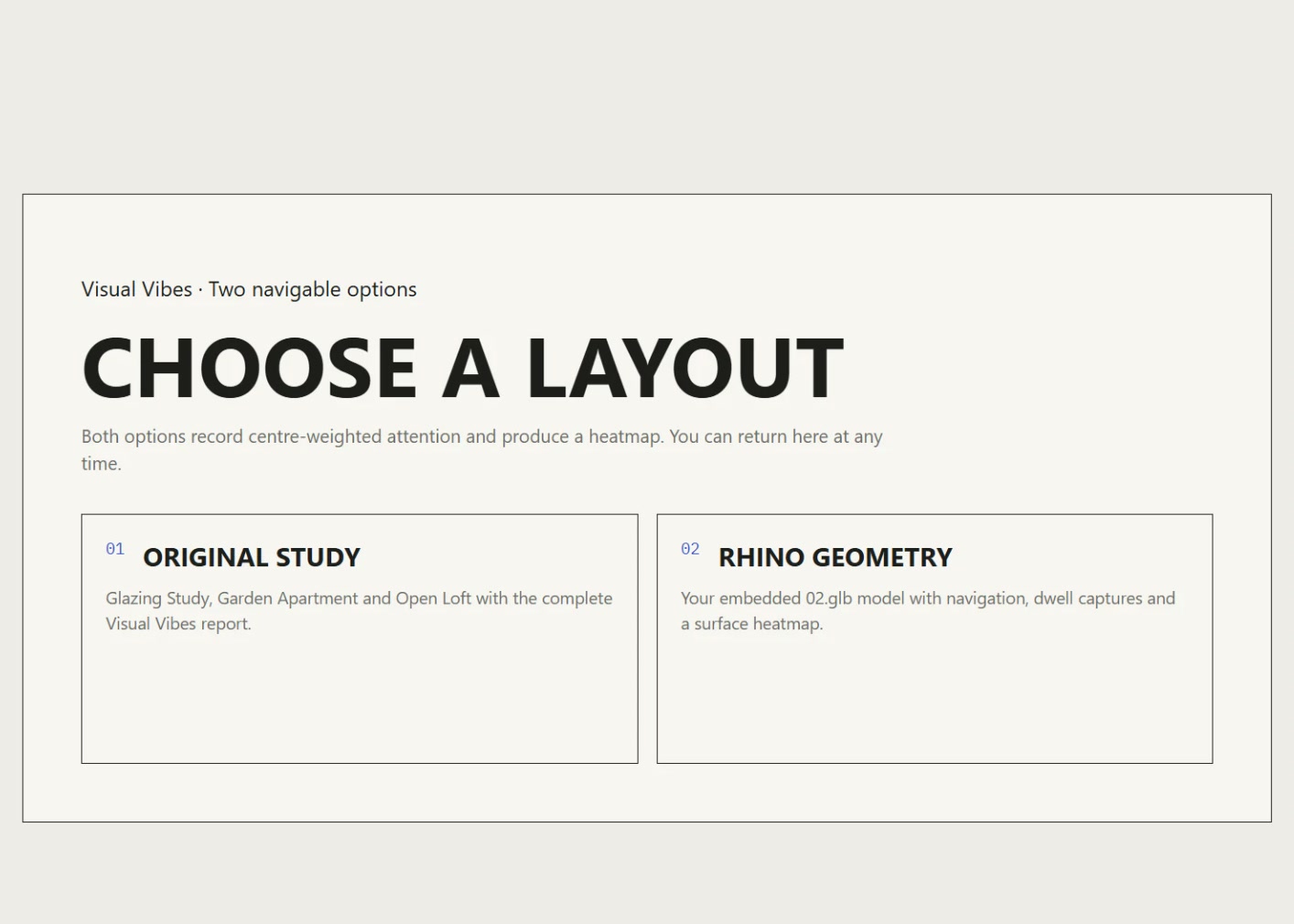
The original study or the Rhino geometry

03
Surface heat, and every object ranked by look time
Visual Vibes · Rhino geometry in the web app
Second study · life safety
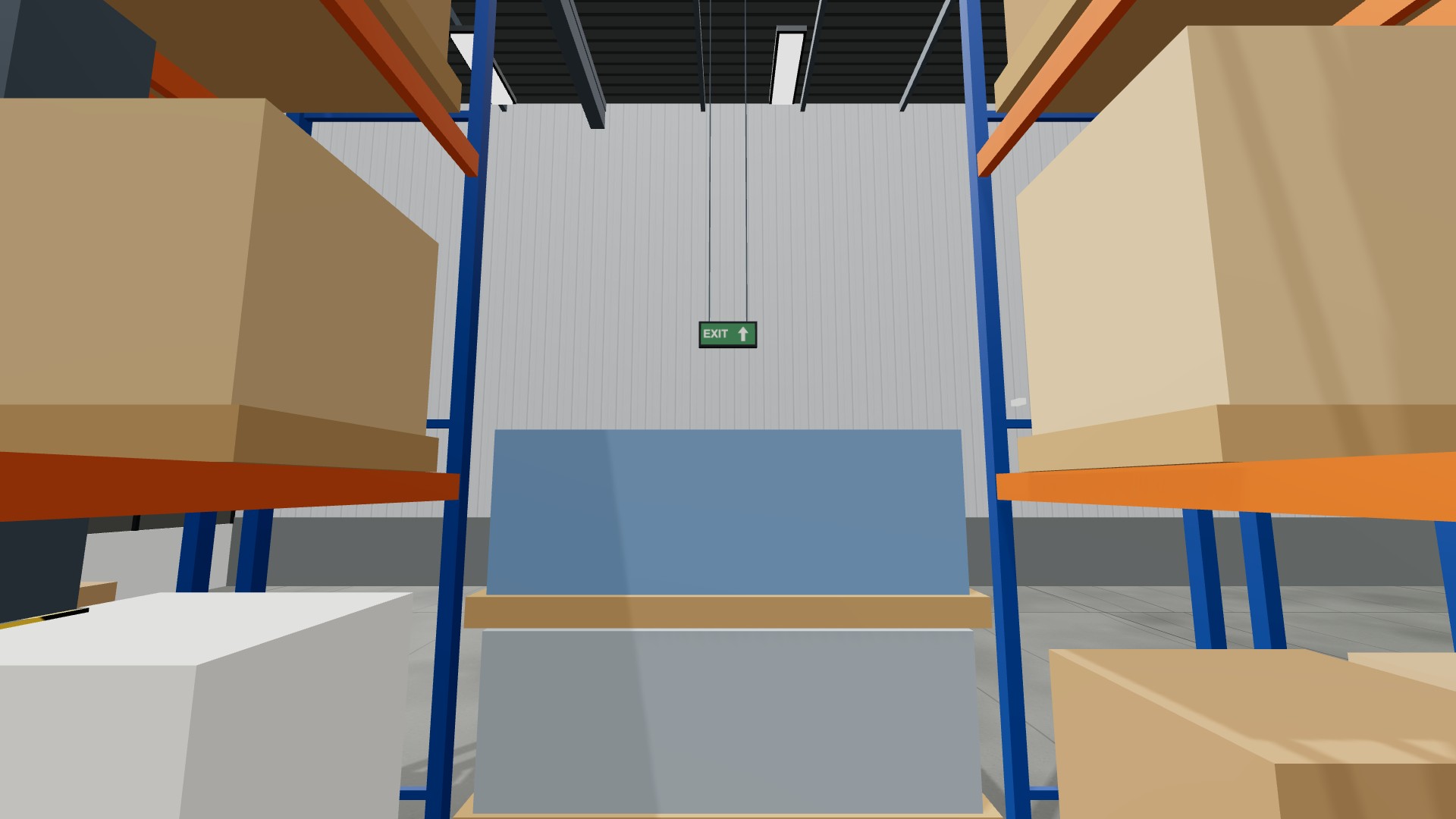
Same engine, a harder question: can people find their way out?
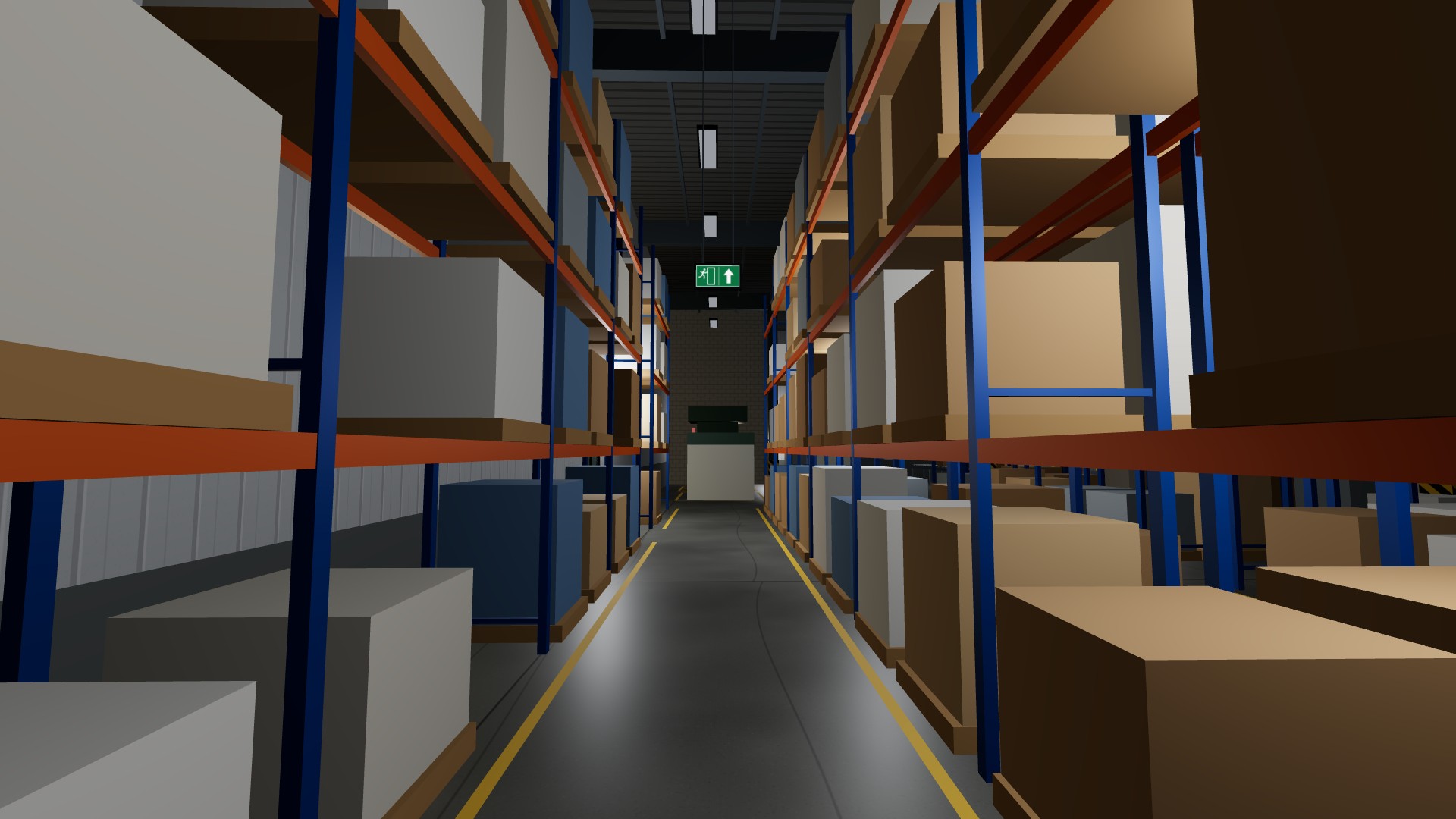
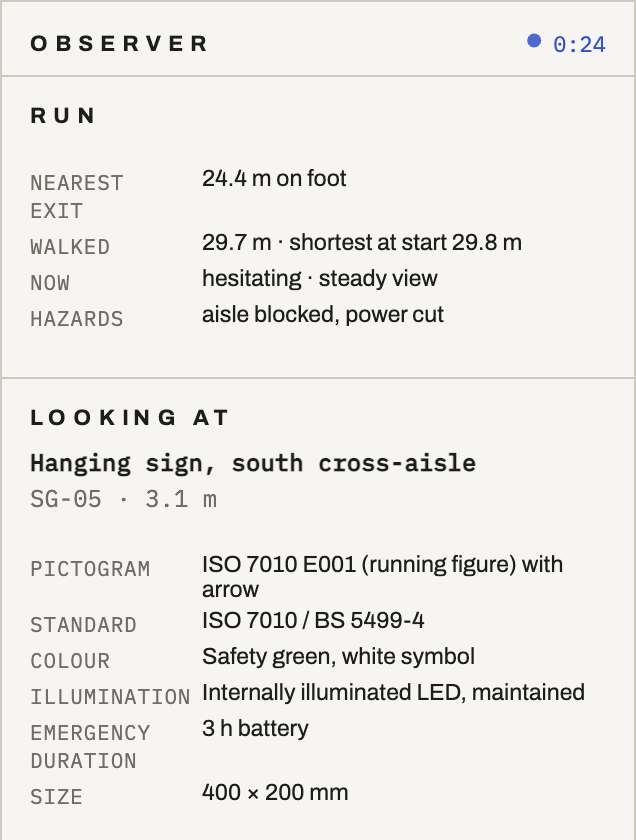
Night shift · alarm · falling stock · power cut · every exit sign carries its own metadata
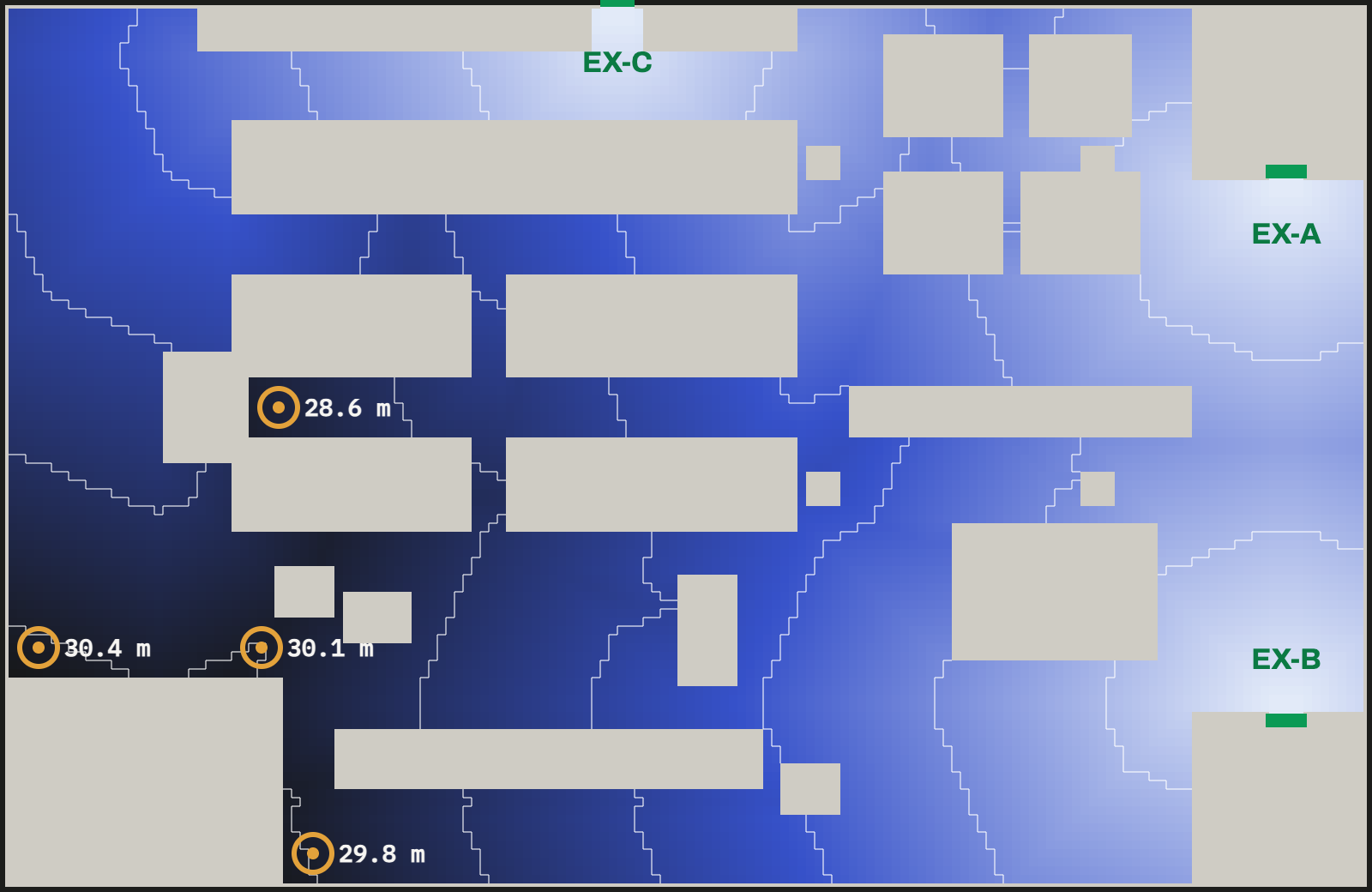
Factory egress · the spawn

29.8 m
on foot to the nearest exit from this spawn
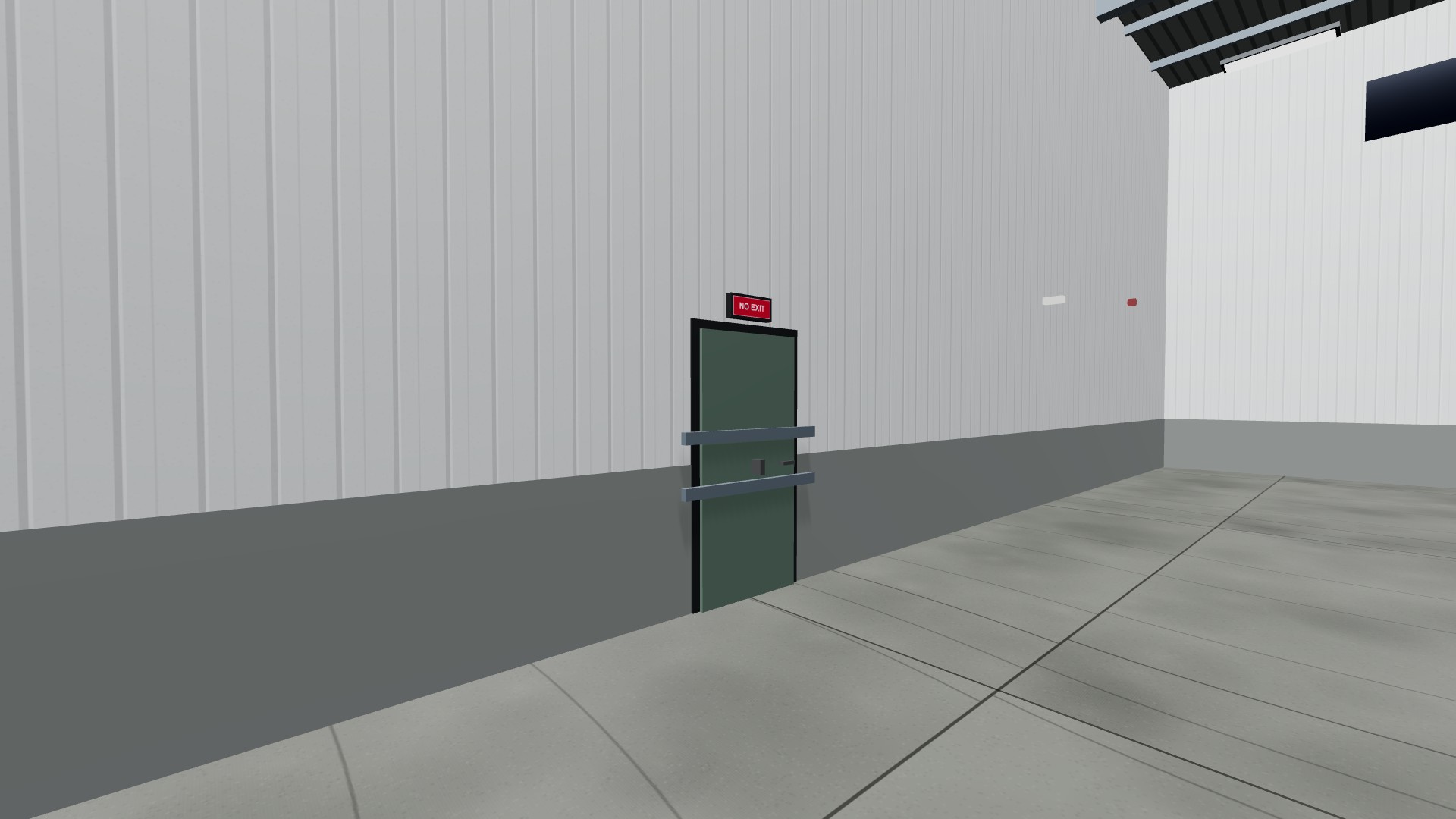
3 exits · 5 decoys
two stairs and an external door; a lift, two shutters, an office and a sealed exit
14 signs
illumination, size, mounting and rated viewing distance on each
Visual Vibes · factory egress · walking distance on a 0.25 m grid, lighter is closer to an exit
Factory egress · the scenario
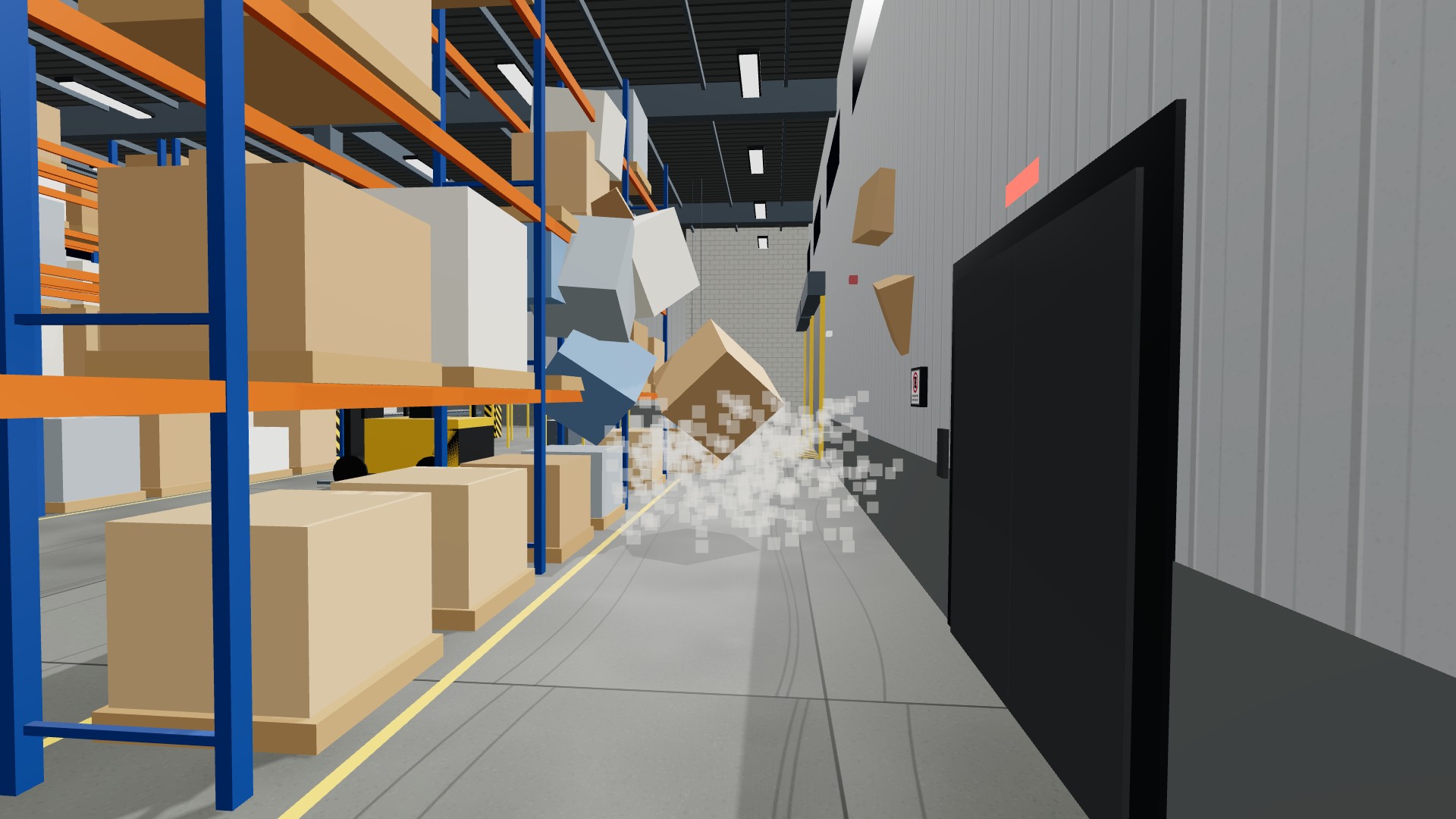
An alarm and a shake start the run. Stock then falls a few metres ahead on the walker’s own shortest route, always leaving another way out.
Camera shake has its own switch for anyone prone to motion sickness.

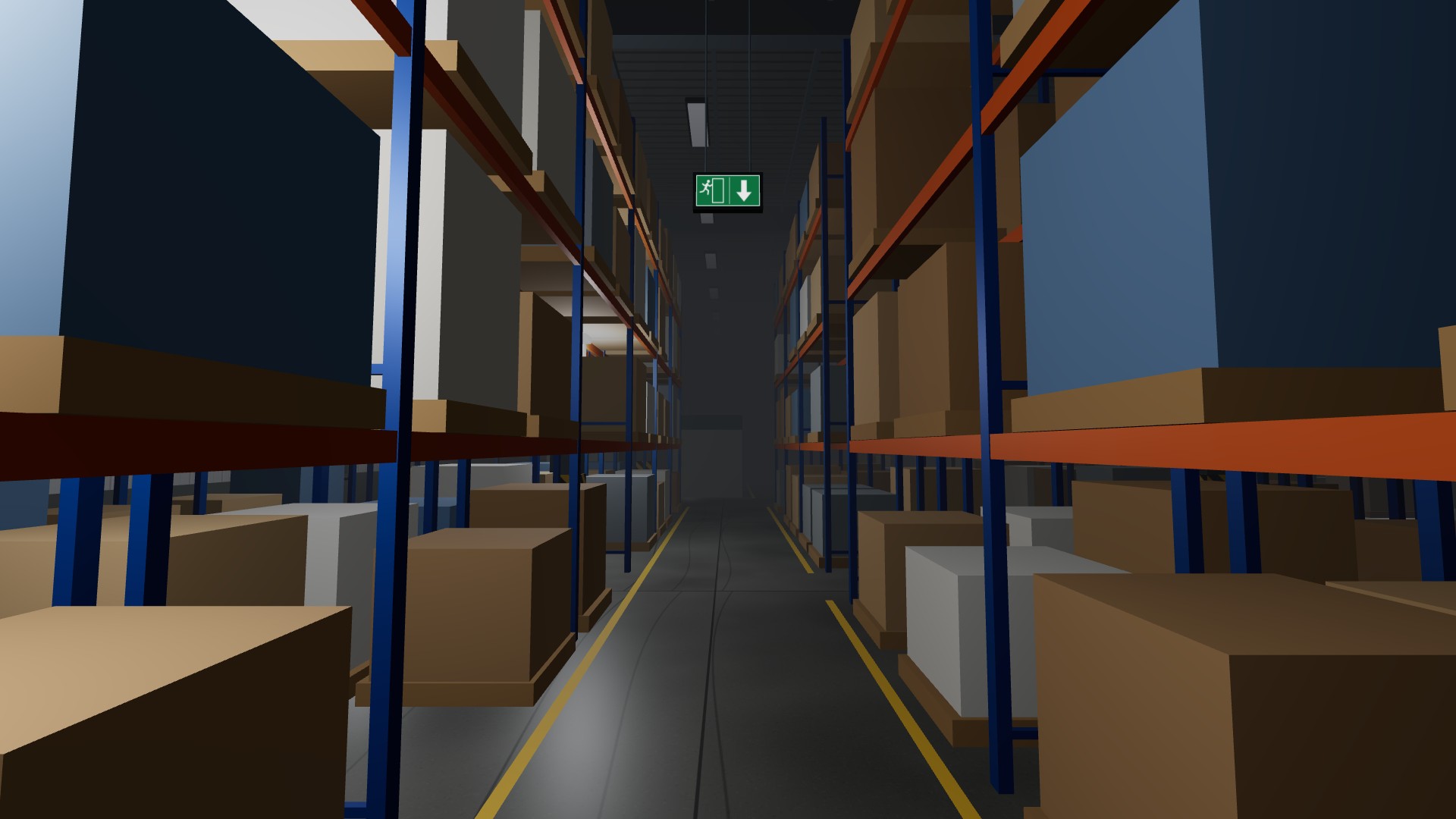
Stock falls onto your route

Power cut: emergency light only

Smoke builds up

Decoys: sealed exit, lift, shutters
Visual Vibes · factory egress
Factory egress · the signs
On screen, facing you, nothing in between, and enough light and clear air for its type.
Within its rated distance: Z factor × sign height, 200 for lit signs and 100 otherwise.
Held within 3° of the centre of view for a quarter of a second, view steady.
Within 4 s, moved the way it points, or towards its door.
Visual Vibes · factory egress · Observer mode, live
Factory egress · one run, decoded

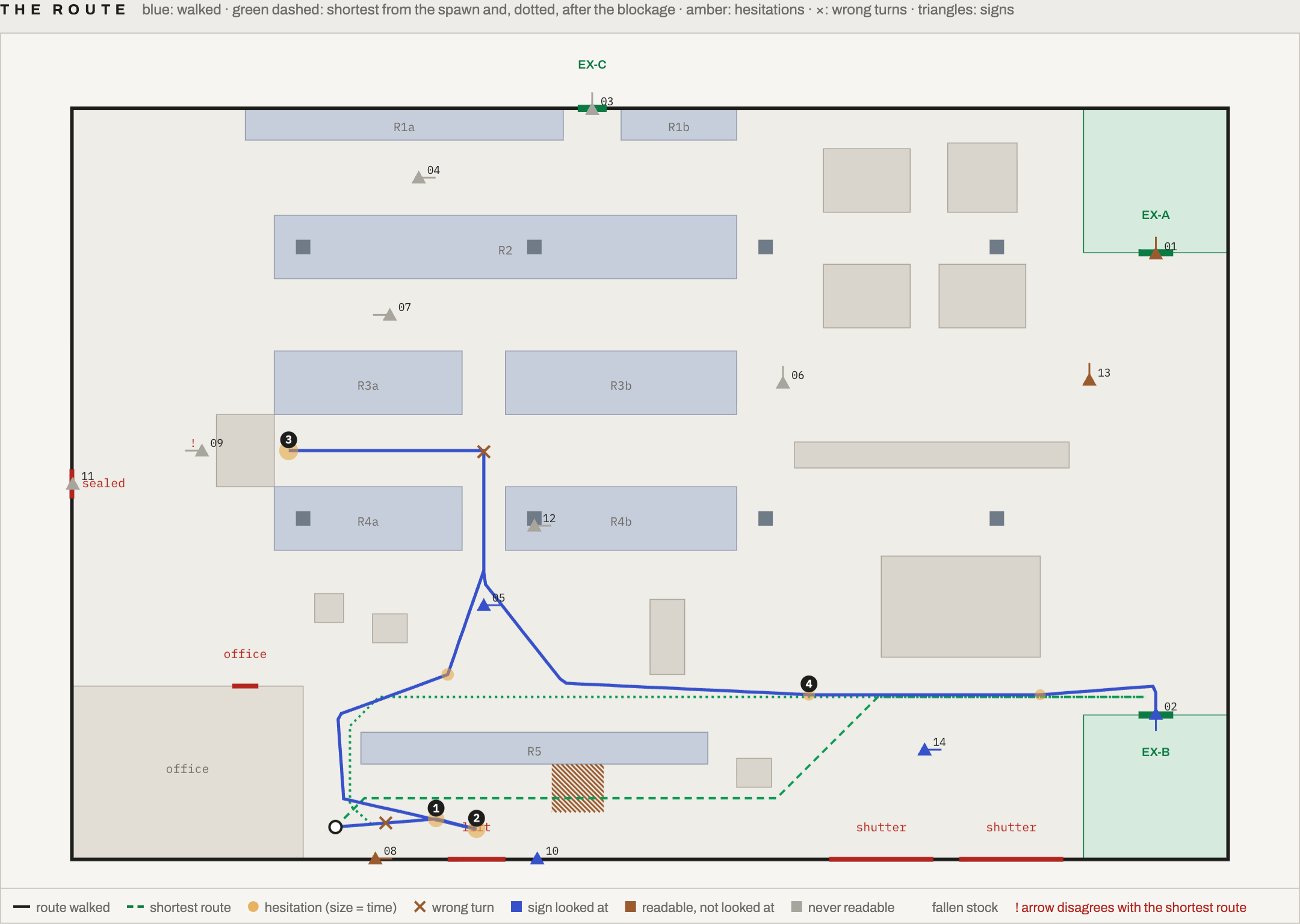
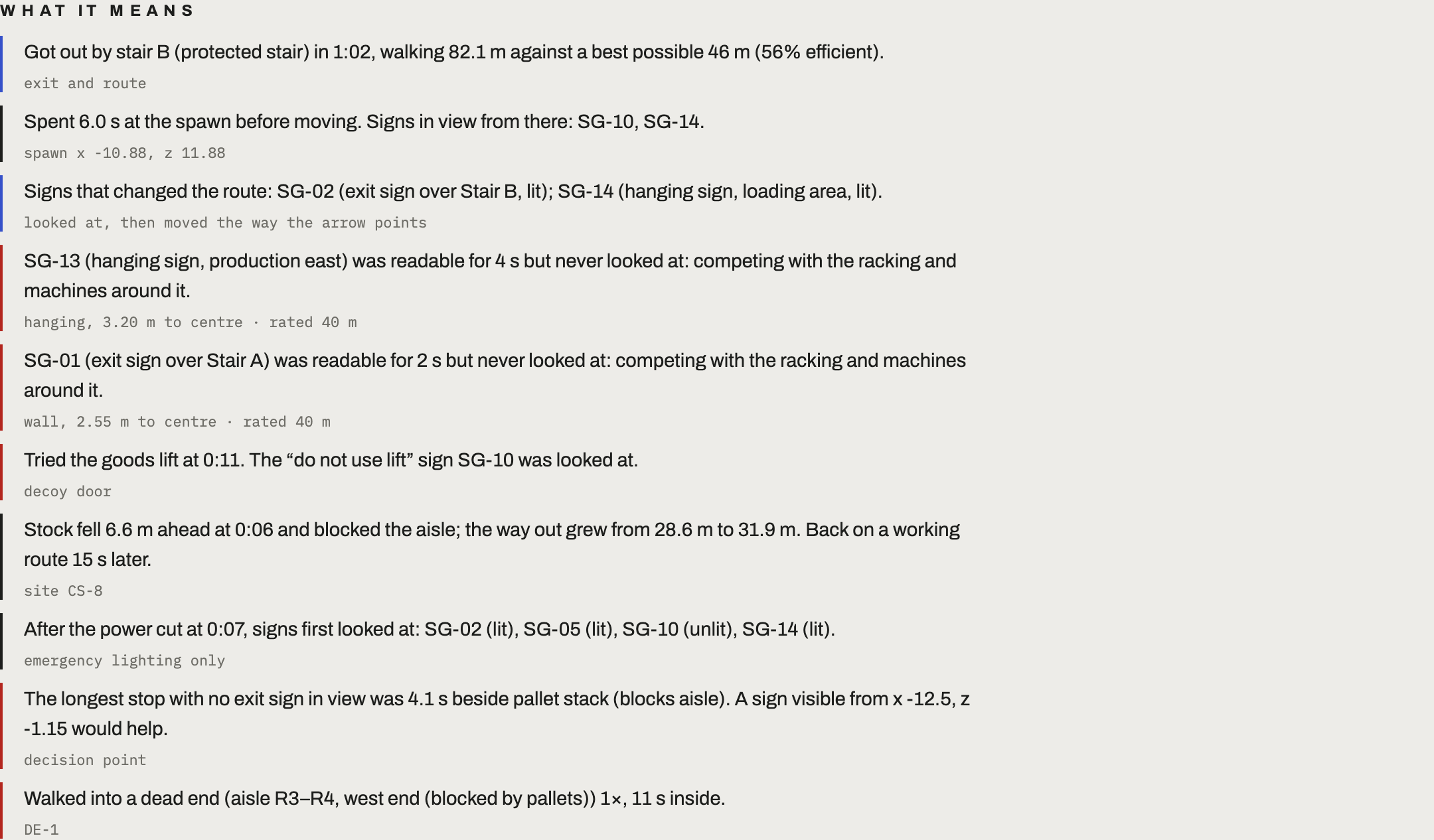
Out in 1:02
by Stair B, after the aisle was blocked
56% efficient
82 m walked against a best possible 46 m
3 wrong turns
37 m of detours, 11 s inside the dead end
1 wrong door
tried the goods lift during the power cut
Visual Vibes · factory egress · one scripted demo run
Factory egress · sign audit

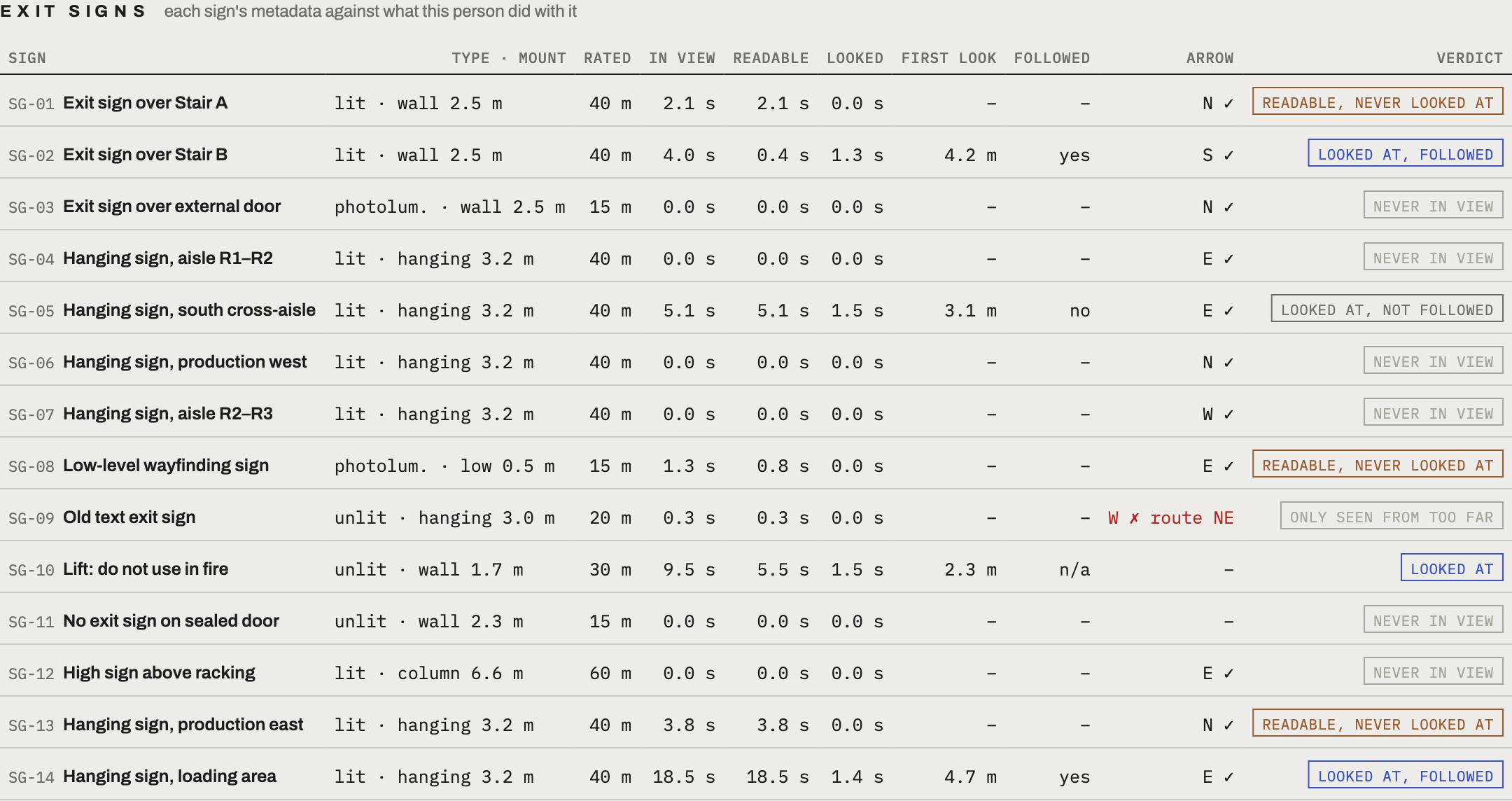
SG-14, a lit hanging sign: looked at from 4.7 m, then followed east.
SG-08, low-level photoluminescent, and SG-13: readable, never looked at.
SG-09, a superseded text sign, points west. The shortest route heads north-east.
Visual Vibes · factory egress · report
Factory egress · findings

SG-09 points straight into a pallet block. Behind it is the sealed former exit.
Visual Vibes · factory egress · report
Where it goes next
Bring in a Revit or Rhino model; its IFC properties become the metadata.
Test signs, decoy doors and routes with people before construction.
Run the walk on a VR headset with eye tracking instead of the screen centre.
8 to 12 people per study, with decoded vs stated picks as the accuracy check.
Use manufacturers’ glass, finish and sign data as the options people test.
Visual Vibes · github.com/MF-Little/AEC-Hack-Project